
Dignity Is a Need Too

Sometimes changing a life begins by helping someone recognize themselves again.
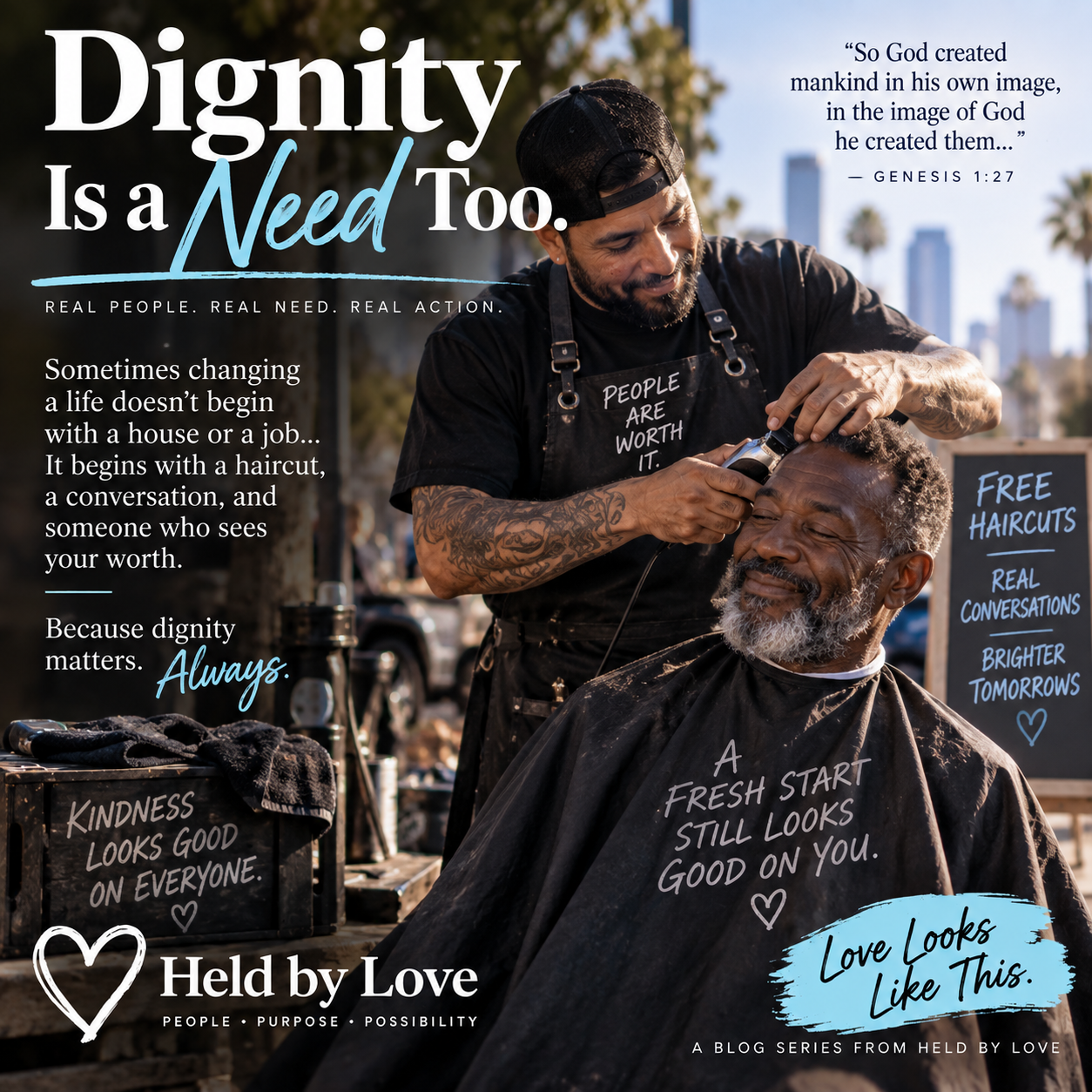
On a sidewalk beside MacArthur Park in Los Angeles, something unusual began happening. There was no building. No reception desk. No appointment book. Just a barber, a chair, a pair of clippers—and people who were accustomed to being passed by.
His name is Beraldo Gabaldon. And he wasn't simply cutting hair. He was reminding people that they were still worth caring for.
He Knew What It Was Like to Need Another Chance
Beraldo's story wasn't one of someone standing safely on the other side of hardship looking back at people who were struggling. He understood struggle himself. After years battling drug and alcohol addiction, Beraldo got sober and came to California hoping to begin again.
Instead of trying to distance himself from people whose lives reminded him of where he had been, he moved toward them. He brought the skill he had: barbering. He began offering free haircuts to people experiencing homelessness near MacArthur Park, spending hours at a time cutting hair on the sidewalk.
More Than a Haircut
Anyone who has ever sat in a barber's chair knows something interesting happens there. People talk. They tell stories. They talk about relationships, mistakes, dreams, families, fears and sometimes things they haven't told anyone else.
Because Beraldo could speak openly about his own history with addiction and recovery, the people sitting in his chair could recognize something in him: he wasn't judging them. He understood. He hoped something as simple as a haircut might provide a spark for someone trying to change their life.
A haircut cannot provide housing. It cannot erase addiction. It cannot repair every broken relationship. It cannot solve homelessness. But perhaps it can do something we sometimes underestimate: it can help someone look in the mirror and recognize themselves again.
Dignity Is a Need Too
At Held by Love, we talk often about practical needs. Food matters. Housing matters. Clean clothing matters. Identification matters. Transportation matters. A safe place to sleep matters. And yes—clean laundry matters.
But human beings have another need that doesn't always appear on an assistance application: dignity. The feeling that someone sees you. The feeling that your appearance matters. The feeling that someone believes you are worth their time. The feeling that, for thirty minutes, you aren't the homeless person sitting on the sidewalk. You're simply the person sitting in the barber's chair.
Jesus Saw the Person Before the Problem
Again and again in Scripture, Yeshua encountered people society had reduced to labels—the blind man, the leper, the sinner, the poor, the outcast. But He never treated people as categories. He saw people.
That distinction matters. Because compassion isn't simply asking, “What does this person need?” Sometimes compassion asks, “What would help this person remember who they are?” That may be a haircut. A clean outfit. Freshly washed clothes. A shower. A meal served on a real plate. Someone remembering their name. Someone sitting beside them instead of standing over them. Someone saying, “You matter enough for me to stop.”
What Is Already in Your Hands?
One of the most beautiful things about Beraldo's story is that he didn't wait until he could create a massive organization. He used what he already knew how to do. He had clippers. He had scissors. He had experience. He had a story. So he brought them to the sidewalk.
Maybe you're a barber. Maybe you're a mechanic. Maybe you own a washing machine. Maybe you're a photographer. Maybe you know how to write résumés. Maybe you're a teacher. Maybe you're good at listening. Maybe you have an extra meal. Maybe you have connections that could help someone find a job. Maybe you simply have an hour. You don't have to possess everything someone needs. You can give the thing you have.
Love Restores What Life Tries to Take Away
Homelessness can take away a lot: privacy, security, routine, possessions, sometimes relationships, sometimes hope. But there is something our communities should never allow hardship to take from another human being: their dignity.
Beraldo Gabaldon didn't walk onto that sidewalk carrying the solution to homelessness. He carried clippers. And compassion. Sometimes that is exactly how change begins.
I see you. You still matter. Come sit down. Let me take care of you for a little while.
That is compassion in action. That is dignity restored. That is what love looks like. — Held by Love
Love Looks Like This
This article is part of Held by Love's Love Looks Like This series—real people, real need, real action. Love without conditions. Dignity without judgment. Community without walls.


Comments